

Why IAM for Financial Institutions Is the Most Critical Investment of 2026
The breach that ends your institution will not come through a firewall gap. It will walk in through a front door you left unlocked: a stolen credential, an orphaned account, an over-privileged vendor. This is the identity threat landscape of 2026, and identity and access management (IAM) for financial institutions has never been more urgent. Are you ready?
Key Takeaways
- The majority of successful attacks exploit gaps in IAM, including orphaned accounts, excessive privileges, and weak authentication controls.
- The financial services perimeter is now defined by identity.
- Credit unions and regional institutions face enterprise-grade threats with leaner teams, making effective IAM a necessity, not a luxury.
- Modern IAM is built on Zero Trust principles, continuous verification, and automated governance, reducing risk while simplifying compliance.
- IAM is no longer an IT initiative. It is a board-level priority that directly impacts risk, compliance, and business growth.
Financial services have always been built on one currency above all others: trust. However, the architecture of trust has fundamentally changed.
- Firewalls no longer define your perimeter.
- Data centers do not contain your risk.
- Networks do not delineate your boundary.
Your perimeter is now your identity fabric.
Every employee login, every customer session, every API handshake between fintech platforms, every third-party vendor provisioned with elevated access, all serve both as a business enabler and a potential breach vector. Adversaries and threat actors have already adapted to this reality. The question remains whether your institution has.
The Identity Threat Landscape: Why Attackers Target Access, Not Infrastructure
The cyberattacks striking financial institutions today are not brute-force intrusions against hardened infrastructure. They are surgical, identity-driven exploitations of the access gaps your organization has accumulated over years of digital growth:
- Credential theft and account takeover remain the leading breach methods across financial services. In addition, AI-enhanced phishing has dramatically lowered the cost of a convincing attack.
- Third-party and vendor integrations have become indirect highways into core banking systems. You may be securing your front door while leaving the loading dock wide open.
- API proliferation in fintech ecosystems has created an expansive, poorly governed attack surface that most institutions have not fully mapped, let alone secured.
- AI-augmented social engineering is redefining what “human error” looks like. And in this context, identity has become the primary target.

Simultaneously, your institution faces compounding operational pressures: accelerate digital transformation, deliver frictionless customer experiences, integrate with partner ecosystems, support hybrid workforces, and maintain ironclad regulatory compliance.
The same digital capabilities driving your growth are expanding your identity attack surface. This is not a technology paradox but a governance gap.
The Real Cost of Identity Failure in Financial Services
When identity controls fail, consequences do not wait for the quarterly risk report. They are immediate, measurable, and often existential.
A single compromised privileged account can enable unauthorized access to sensitive financial data, trigger fraudulent fund transfers within minutes, expose your institution to material regulatory penalties, and permanently damage the member trust you have spent decades building.
What is more surprising, however, is what incident post-mortems consistently reveal: most breaches are not the result of sophisticated zero-day exploits. They are the direct consequence of operational IAM failures that were entirely preventable.
The five most common and most costly IAM failure points:
#1 Overprivileged users: Staff with access far beyond operational necessity, accumulated silently over months or years.
#2 Orphaned accounts: Departed employees, contractors, or vendors whose credentials remain active and exploitable.
#3 Misconfigured Controls: Access policies set for legacy architectures that no longer reflect your current hybrid environment.
#4 Weak Authentication: Password-only access to systems managing direct financial transactions and sensitive customer data.
#5 Entitlement Sprawl: Role-based access that was never revoked when employees changed functions, exacerbating risk.
Where IAM Programs Break Down: Common Failure Points
Despite significant cybersecurity investments, persistent and costly weaknesses in financial services’ IAM programs leave their maturity trailing today’s increasingly sophisticated threats.
Privileged Access Mismanagement
Privileged accounts are the master keys to your institution’s critical systems. When overprovisioned, poorly monitored, or inadequately governed, they become the highest-value targets in your environment. Attackers do not need to compromise ten accounts; all they need to compromise is one: the right one.
Identity Lifecycle Gaps
Manual onboarding and delayed deprovisioning create “ghost accounts.” These are credentials that persist long after the employee, contractor, or vendor relationship has ended. Every dormant account is a door that should have been locked.
Fragmented Visibility
Hybrid environments spanning on-premises systems, cloud infrastructure, SaaS platforms, and third-party integrations create visibility blind spots. Without a unified identity plane, your security team is flying blind through turbulence with no instruments.
Entitlement Sprawl and Privilege Creep
Access accumulates, roles evolve, and permissions are granted but rarely revoked. The result is a workforce holding entitlements wildly inconsistent with current job functions and an audit finding waiting to materialize.
Compliance Fragility
Manual audits and siloed reporting cannot sustain the evidentiary demands of GLBA, FFIEC, SOX, or emerging AI governance frameworks. If your compliance team is building audit packages by hand, your institution is both overexposed and overworked.

IAM Is Not an IT Function, It Is a Board-Level Imperative
For too long, Identity and Access Management has been treated as a back-office IT control: important, but not strategic. In 2026, IAM sits at the intersection of your most critical enterprise concerns.
For the CTO, identity is the foundational layer of your technology architecture. Frictionless authentication, secure API integration, and scalable digital onboarding are impossible without a mature IAM foundation.
For the CISO, identity is your first line of defense and your highest-probability breach vector. Zero Trust cannot exist without identity governance. Your threat model is incomplete without it.
For the CRO, identity failures are simultaneously operational, financial, reputational, and regulatory risks. IAM maturity directly reduces your institution’s residual risk profile and improves your regulatory posture.
The Modern IAM Architecture: Six Capabilities Leading Institutions Are Building
Best-in-class IAM programs are no longer static policy libraries or manual access review cycles. They are dynamic, intelligence-driven frameworks built on six foundational capabilities.
1. Zero Trust Architecture (ZTA)
Trust is never assumed. Every access request, regardless of network location or user history, is continuously evaluated against identity, device posture, and behavioral context. No implicit trust. No inherited permissions. Verify always.
2. Risk-Based and Adaptive Multi-Factor Authentication
Authentication that scales with threat signals. A routine login from a known device at a standard hour should be frictionless. An anomalous access attempt from an unrecognized location at 2 AM should trigger step-up verification automatically.
3. Identity Governance & Administration (IGA)
Automated access certifications, role lifecycle management, and policy enforcement create a continuous compliance posture, not a point-in-time snapshot. Audit readiness becomes a byproduct of your operating model, not a fire drill.
4. Privileged Access Management (PAM)
Just-in-time access provisioning, comprehensive session monitoring, and least-privilege enforcement reduce the blast radius of high-impact account compromises. In other words, your most powerful credentials become your most controlled ones.
5. AI-Driven Identity Intelligence
Machine learning models detect behavioral anomalies that rules-based systems miss. Thus, suspicious access patterns, impossible travel, and unusual entitlement usage are flagged before they become incidents.
6. Customer Identity & Access Management (CIAM)
Security and member experience are not competing priorities. Modern CIAM delivers frictionless digital onboarding, secure session management, and personalized access at scale, without compromise.
The Disproportionate Risk Facing Credit Unions and Regional Banks
Large financial institutions have the budget to build IAM programs that span hundreds of full-time equivalents. Credit unions and mid-market banks do not have that luxury, and threat actors know it.
Lean teams, tight budgets, legacy systems, and vendor dependence create real constraints but no less risk. In fact, the exposure is greater.

Intruders do not size their ambition to your security budget. A credit union managing $2B in member assets is just as attractive a target as a regional bank three times its size. Often, it is also significantly easier to breach.
Vendor and third-party relationships introduce additional risk vectors that originate outside your perimeter but impact your member data and operational integrity. Every integration point is a potential liability.
The imperative is clear: enterprise-grade IAM capabilities, delivered in a way that is operationally practical, financially sustainable, and built for your regulatory environment.
How iShift Enables Modern IAM for Financial Institutions
Purpose-built to bridge the gap between complex identity threats and limited institutional resources, iShift operates as a strategic extension of your security and technology leadership by delivering a holistic, security-first architectural approach that prioritizes accountability for outcomes over mere activities.
Below is the blueprint we use when engaging with financial institutions:
IAM Strategy & Advisory
We begin where most engagements fail: alignment. iShift defines an IAM roadmap anchored to your business objectives, regulatory obligations, risk posture, and digital transformation timeline. We do not implement IAM in isolation; we incorporate it into your enterprise strategy from day one.
Identity Governance & Intelligent Automation
By integrating deep expertise with leading tools and advanced automation frameworks, iShift eliminates the manual processes that drive operational risk and compliance exposure. This transition enables automated provisioning and deprovisioning, role-based access control, continuous access certification, and environment-wide policy enforcement.
Secure Hybrid Identity Architecture
iShift specializes in unifying identity across the environments most financial institutions live in: on-premises Active Directory, Azure and AWS cloud platforms, SaaS applications, and third-party integrations. The result is one identity plane with full visibility and complete control.
Privileged Access & Zero Trust Implementation
We embed least-privilege principles and just-in-time access into your operating model. Conditional access policies, multi-factor authentication architecture, and zero-trust framework alignment are implemented without disrupting the workflows your teams depend on.
Regulatory Compliance & Audit Readiness
With deep experience in GLBA, FFIEC, HIPAA, and SOX environments, iShift ensures your IAM program does not just meet compliance requirements, but that it also generates continuous evidence of compliance. Audit-ready reporting and automated controls monitoring prevent stressful last-minute scrambles.
vCISO & Strategic Security Integration
IAM is most powerful when it is part of a holistic security posture. iShift’s in-house CISO capabilities extend identity governance into enterprise risk management, policy development, security program maturity, and emerging AI governance frameworks, including NIST AI RMF readiness.
Continued Managed Program with iCompli
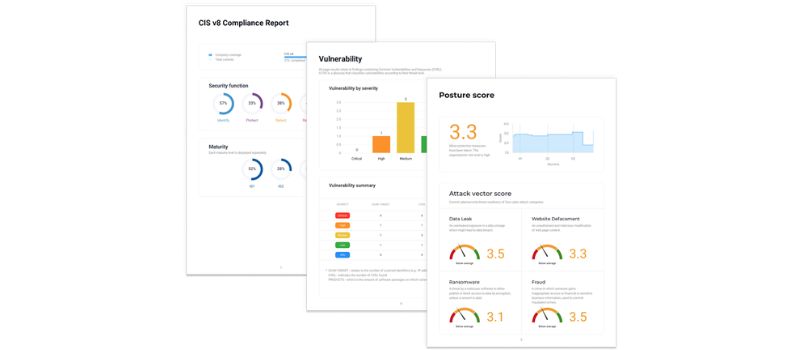
Our AI-powered iCompli becomes a force multiplier for IAM by turning identity strategy into a continuously managed, measurable security program. Instead of treating IAM as a one-time implementation, iCompli brings a vCISO-led approach that aligns identity controls with real business risk, regulatory requirements, and evolving threat patterns. For financial institutions with lean teams, this means gaining executive-level security guidance, clear accountability, and continuous improvement without the overhead of building a full in-house program.
From Identity Risk to Institutional Advantage
In 2026, two categories of financial institutions are emerging:
- Those that treat IAM as a compliance obligation: reactive, underfunded, and perpetually behind the threat curve.
- And those that treat IAM as a strategic capability: one that enables faster growth, stronger trust, and more resilient operations.
When executed with precision, IAM transcends its role as a cost center to become a powerful competitive differentiator. This shift is achieved by accelerating employee and partner onboarding, securing fintech integrations, and delivering superior digital member experiences – all while materially reducing fraud and establishing a regulatory posture that inspires examiner confidence.
Identity is no longer a security problem you manage. It is a business capability you build. The organizations that master identity in 2026 will define the competitive landscape for the decade that follows.
The Institutions That Win Will Control Identity
There is only one question that matters for your security posture, risk profile, and operational integrity:
Who has access, to what, and why right now, in real time?
The institutions that can answer that question with confidence will prevent breaches, earn lasting member trust, and accelerate digital transformation with the security posture that sustains it.
Frequently Asked Questions: IAM for Financial Institutions
Q: What is IAM and why does it matter for financial institutions?
A: Identity and Access Management (IAM) is the framework of policies, processes, and technologies that controls who has access to what systems and data and under what conditions. For financial institutions, IAM is critical because stolen credentials and over-privileged accounts are the leading cause of breaches. Unlike firewall or network-based defenses, IAM governs access at the identity level, which is where modern attacks primarily occur.
Q: What is Zero Trust and how does it apply to financial services cybersecurity?
A: Zero Trust is a security model that eliminates implicit trust. Every access request is verified against identity, device health, and behavioral context, regardless of whether the user is inside or outside the corporate network. For financial institutions operating hybrid environments with cloud, SaaS, and on-premises systems, Zero Trust provides a consistent access governance framework across every environment and user type.
Q: How can a Credit Union afford enterprise-grade IAM?
A: Credit unions and regional banks face a real resource asymmetry: enterprise-level threat exposure with leaner security teams and tighter budgets. The most effective approach is partnering with a specialized IAM provider, such as iShift, that delivers strategy, implementation, and ongoing governance as a managed service. This provides enterprise IAM capabilities without requiring a large internal security team.
Q: How does IAM support GLBA, FFIEC, and SOX compliance?
A: IAM directly supports regulatory compliance by automating access certifications, enforcing least-privilege access, generating continuous audit evidence, and managing the full identity lifecycle. Instead of manual, point-in-time audit preparation, a mature IAM program makes compliance a continuous byproduct of normal operations. This approach reduces both compliance risk and the operational burden on your team.
IAM is no longer a security project. It is your most important strategic investment.
Ready to learn more? Let’s schedule a free 30-minute discovery call. We will walk through your current infrastructure, challenges, and collaboratively outline a pragmatic framework for modern identity management.