
Artificial Intelligence is already embedded in all industries: underwriting engines, supporting fraud detection, influencing pricing, prioritizing claims. AI powers customer engagement, screens resumes, analyzes risk portfolios, or optimizes supply chains…
In many organizations, AI adoption did not happen through a single strategic decision. It happened incrementally through SaaS platforms, third-party services, internal innovation, or automation initiatives.
AI is influencing business decisions today. Most often, however, AI Governance is not. That gap is where risk lives.
To address this potential vulnerability, our iCompli tool now includes a comprehensive AI Governance module that is aligned with the NIST AI Risk Management Framework 1.0. The goal is not to offer another assessment. It is to operationalize responsible AI in a measurable, defensible, and scalable way.
Let’s talk about what that really means.
The Problem of AI Visibility
Most organizations cannot clearly answer basic AI governance questions:
- Where is AI being used across the enterprise?
- Who owns AI oversight?
- Are AI risks included in the enterprise risk register?
- Is there a defined risk tolerance for AI-driven decisions?
- How are bias, explainability, and data integrity managed?
- Is AI lifecycle security embedded from planning through deployment?
Without structured visibility, AI introduces unknown exposure. And unknown exposure is far more dangerous than calculated risk.
The new AI Governance module in iCompli brings AI into the same structured framework used to manage cybersecurity, compliance, and enterprise risk. It makes AI measurable, governable, and accountable.
From Policy Statements to Operational Governance
Many organizations have begun drafting AI policies. That is a good start. But a policy alone does not prove governance. Regulators, auditors, enterprise clients, and boards are increasingly looking for operational evidence:
- Defined roles and responsibilities for AI oversight
- Documented risk identification and treatment
- Integration of AI risks into enterprise risk management
- Lifecycle security and privacy controls
- Ongoing monitoring and accountability
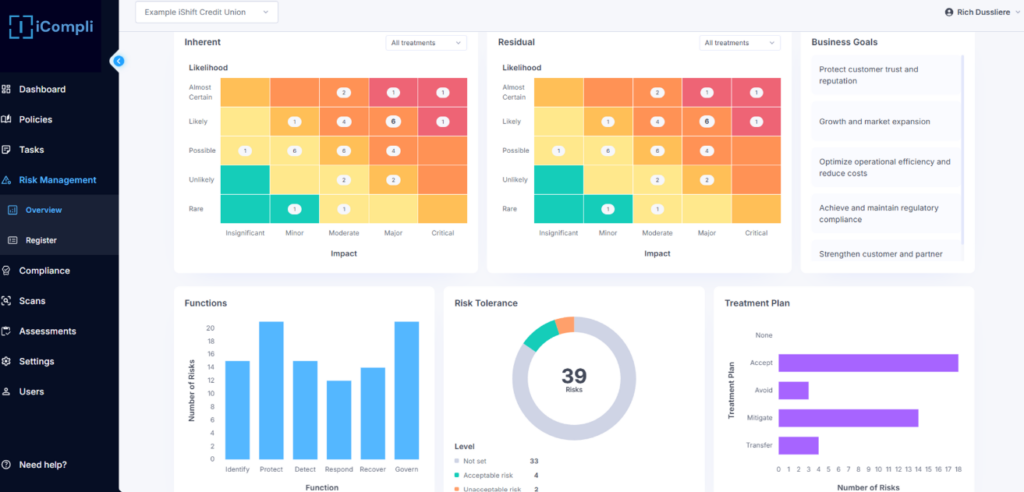
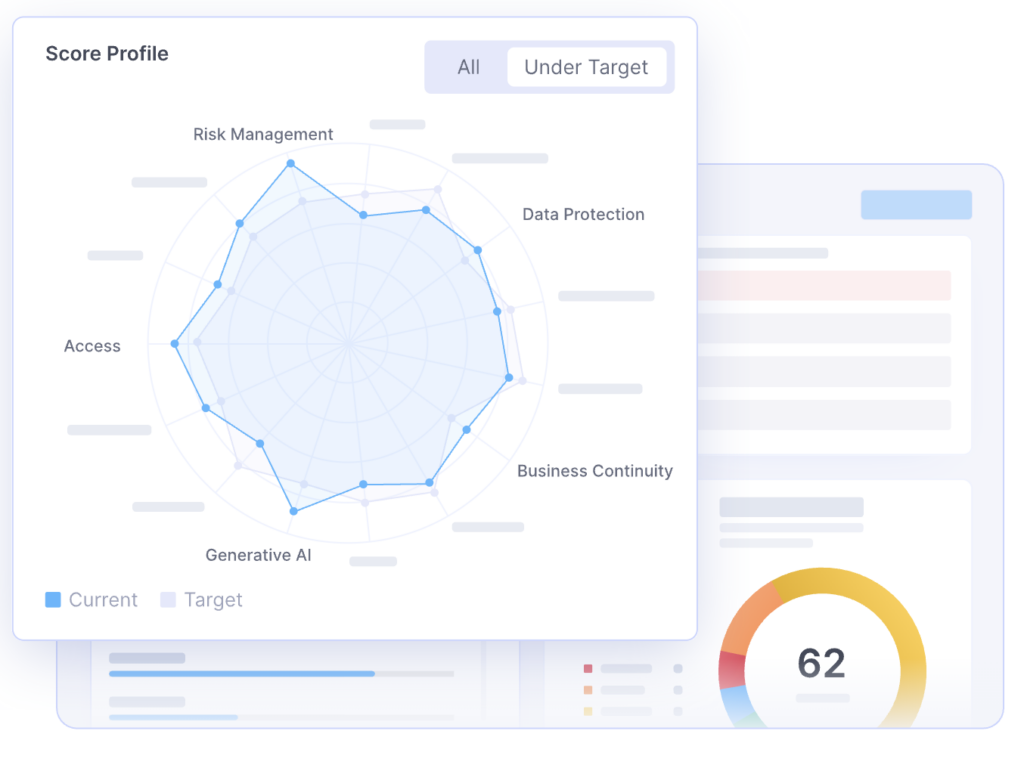
The iCompli AI Governance module transforms governance from a static document into a living program. AI risks are mapped, scored, prioritized, and connected directly to remediation tasks and compliance controls.
This shifts the conversation from “Do we have an AI policy?” to “Can we demonstrate responsible AI management?”
AI Aligned with Business Objectives
AI governance should support strategic goals.
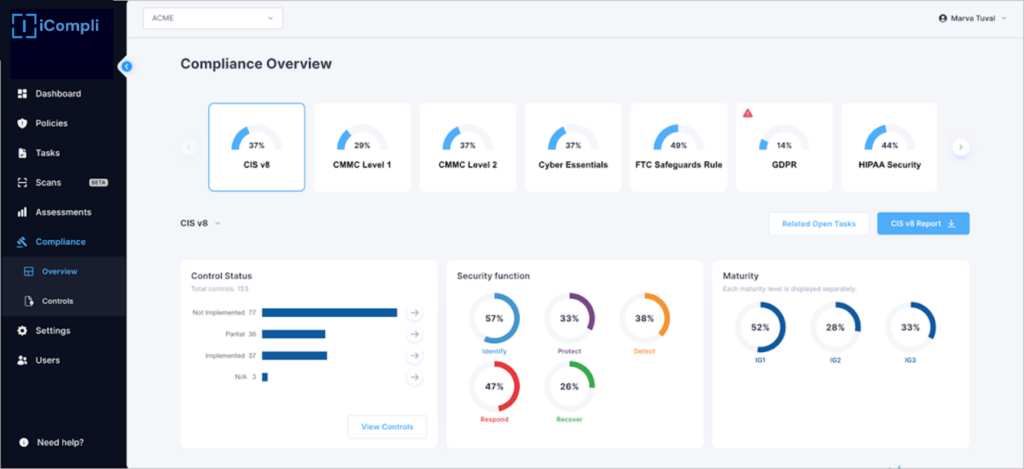
The module evaluates whether AI initiatives align with business objectives, whether leadership actively supports governance, and whether accountability is clearly defined. This ensures AI innovation is not disconnected from enterprise strategy.
When AI governance aligns with business goals:
- Investment decisions become more rational
- Risk tolerance becomes explicit
- Innovation accelerates with guardrails
- Executive confidence increases
This is not about slowing AI adoption, but about enabling it responsibly.
Embedding AI into Your Risk Management
One of the most overlooked gaps in organizations today is the separation between AI initiatives and enterprise risk management.
AI risk is not just technical risk. It includes:
- Decision bias
- Reputational exposure
- Data misuse
- Regulatory non-compliance
- Operational disruption
- Third-party AI dependencies
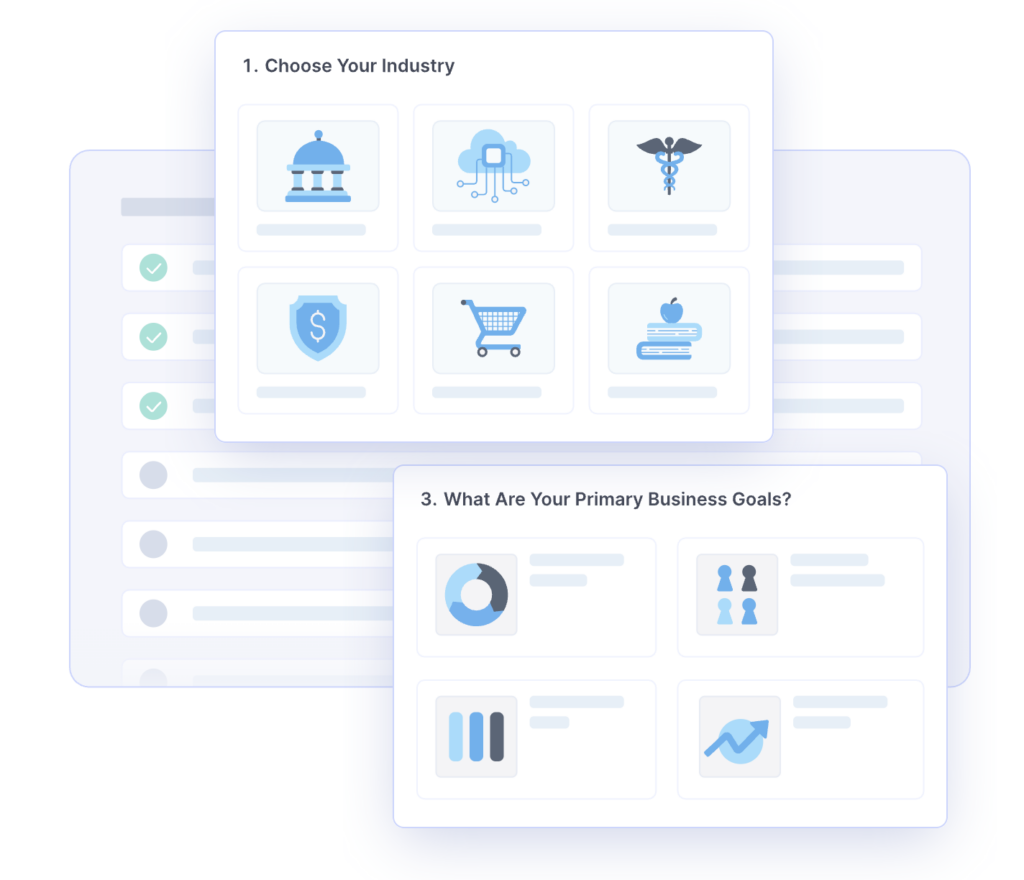
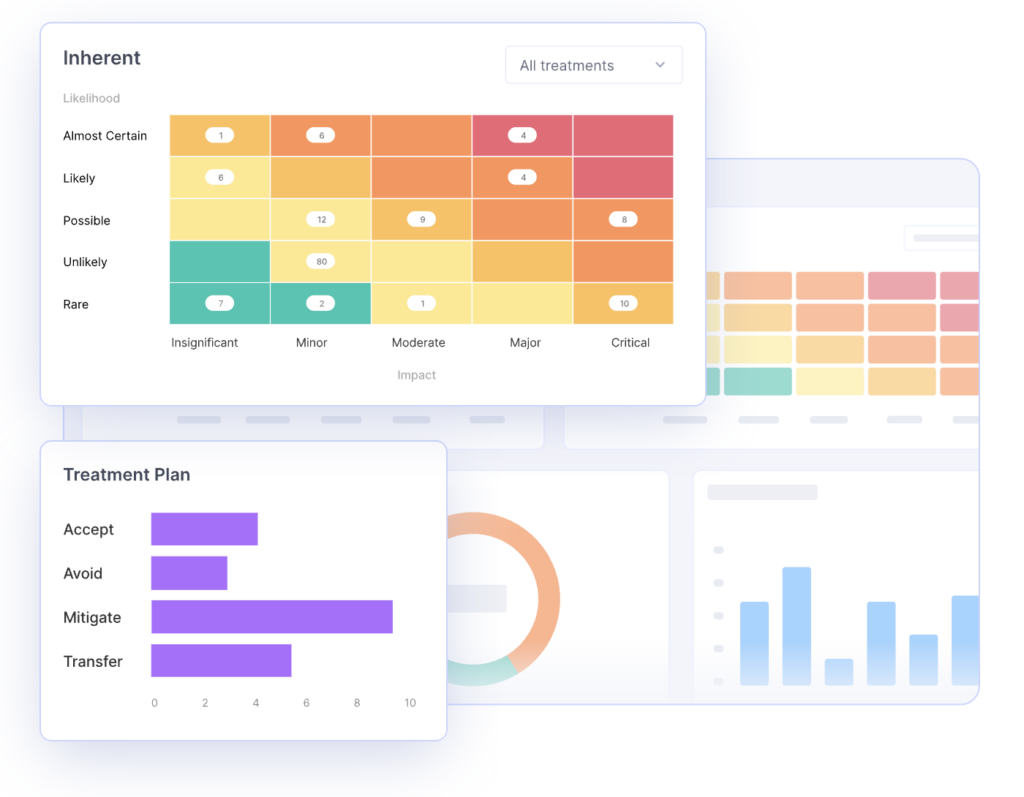
The AI Governance module ensures AI-related risks are formally included in the organization’s risk management framework. Likelihood and impact are measured. Risks are documented in the risk register. Remediation plans are defined.
This elevates AI oversight to the same level of rigor as financial risk, cybersecurity risk, and operational risk. That integration is what regulators are expecting to see.
Securing AI’s Lifecycle
AI governance cannot stop at policy or risk scoring. It must extend across the full AI development and deployment lifecycle.
The module evaluates:
- Application planning and design
- Data collection and input processing
- Model training and validation
- Deployment and operational monitoring
- Post-deployment privacy management
It reinforces Privacy-by-Design and Security-by-Design principles. It verifies that logging requirements are defined. It ensures conformity assessments are performed. It checks that AI-related incidents are incorporated into incident response planning.
This creates lifecycle accountability rather than point-in-time compliance.
Measurable Outcomes
What makes this powerful inside iCompli is not just alignment with NIST AI RMF 1.0. It is the integration with our broader vCISO service.
AI governance becomes:
- Connected to task management
- Linked to security policies
- Mapped to compliance frameworks
- Integrated into reporting dashboards
- Continuously monitored as environments evolve
Leadership gains a single pane of glass view of AI risk exposure and improvement over time.
This enables:
- Clear executive reporting
- Board-level visibility
- Evidence of due diligence
- Defensible regulatory posture
- Measurable risk reduction
The focus shifts from checking boxes to demonstrated progress.
Competitive Advantage, not Just Risk Reduction
There is another dimension organizations are beginning to recognize: AI governance is becoming a competitive differentiator.
Enterprise buyers, partners, and regulators are asking deeper questions about AI usage. Firms that can demonstrate structured AI oversight move through due diligence faster. They build trust faster. They reduce friction in enterprise sales cycles.
AI governance signals maturity. Organizations that operationalize AI oversight today will move faster tomorrow because they will not be forced into reactive governance under regulatory pressure.
Being proactive changes the narrative from compliance burden to market leadership.
Protect Executive and Board Accountability
AI-related failures are not just technical events. They quickly become reputational and governance issues.
Boards and executives increasingly carry personal accountability for technology oversight. Demonstrating that AI risks are identified, managed, and monitored provides evidence of responsible leadership.
Understanding AI readiness and operationalizing governance reduces uncertainty at the highest levels of the organization.
This is not fear-driven messaging. It is realistic governance. Remove the unknown unknowns.
Continuous Evolution, Not a One-Time Assessment
AI governance is not static. Models, regulations, and business use cases evolve.
The iCompli AI Governance module continuously updates risk posture, remediation status, and compliance alignment as environments change. This ensures governance maturity grows alongside AI adoption.
Organizations do not just understand their starting point. They track their progress. And progress is what proves maturity.
Responsible AI Is a Business Capability
AI is no longer optional. But unmanaged AI is unsustainable.
By integrating AI governance into a structured, measurable, and actionable platform, organizations gain:
- Visibility into AI exposure
- Alignment across technology, risk, legal, and business teams
- Confidence to innovate responsibly
- Evidence of regulatory and ethical diligence
- A foundation for sustainable AI growth
If you would like to understand how your organization can operationalize responsible AI and transform governance into a strategic advantage, let’s talk!