
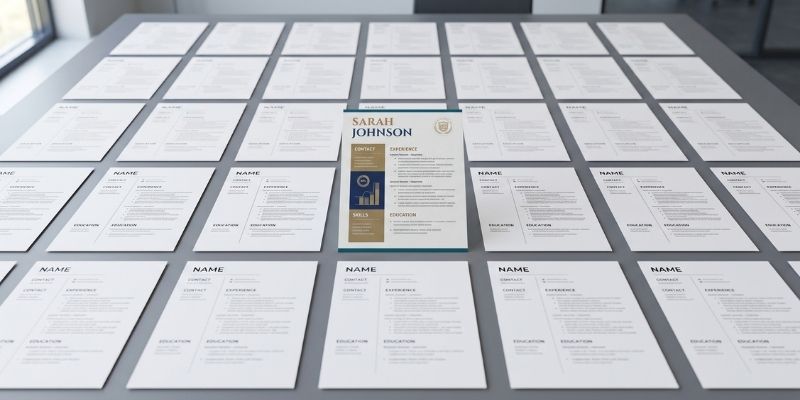
If you are a candidate right now, you already know the market is brutal. You are applying to dozens of jobs and hearing back from maybe one in ten, if you are lucky. If you are on the hiring side, you are living the opposite side of the exact same coin: hundreds of applications landing in your inbox with less time than ever to tell them apart.
Both sides are feeling the same problem from opposite directions. There are more applicants, higher application volume, but exponentially less signal.
Below we break down why so many resumes are getting rejected right now and what to do about it.
The AI Resume Mistake Everyone’s Making
Nearly everyone is running their resume through the exact same handful of generative AI tools to “optimize” their applications. To be fair, these tools excel at one thing in particular: smoothing out grammar, fixing awkward phrasing, and creating clean sentence structures. They take a rough draft and turn it into something that reads clean and professional.
The problem lies in everything else they flatten along the way.
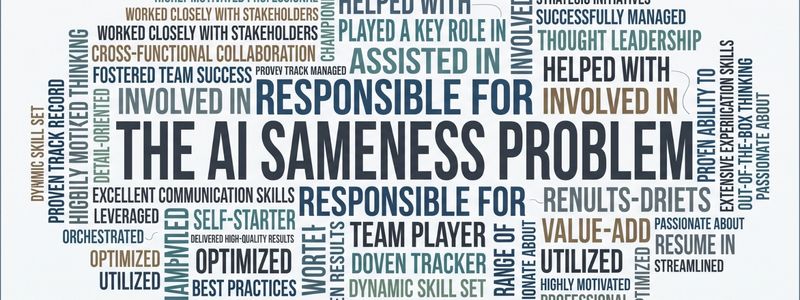
AI resume tools are trained on the same patterns to pull from the same compendium of generic “high-impact” corporate vocabulary. So when thousands of applicants run their resume through the same handful of tools using similar prompts and models, their resumes inevitably converge toward the same robotic cadence: cliched phrasing, structure, and buzzwords.
You have seen the results even if you didn’t know why.
“Leveraged cross-functional expertise to drive strategic results.”
“Utilized a dynamic skillset to foster high-performing team success.”
These phrases show up on resume after resume because the AI tool that wrote them doesn’t know the difference between the engineer who single-handedly rescued a failing migration and the person who simply attended the weekly status calls. It just knows what “strong resume language” sounds like.
The grammar got better, but the real signal completely disappeared.
The Hidden Cost of AI Sameness for Candidates
If you are job hunting, sameness is working against you in a specific way: it flattens the gap between the exceptional and the mediocre.
When every candidate submits a flawlessly polished resume, recruiters can no longer use clean writing as a qualifying signal. Instead, they are forced to fall back on crude shortcuts: blunt keyword matching, brand-name pedigree, or rigid tenure requirements. However, none of those shortcuts tell a hiring manager whether an applicant was actually effective at their job.
Consequently, strong professionals get passed over not due to a lack of competence, but because their achievements are buried under the same borrowed, interchangeable prose as everyone else’s.
None of this requires elite hacking skill. It is within easy reach of exactly the technical candidates this fraud is designed to mimic.
Resume Screening Tips: What Hiring Lose in the Noise
On the other side of the desk, the cost shows up differently, but it is just as heavy. Sifting through a bloated queue of resumes with minimal distinguishing information is a bad trade. It means longer time-to-fill cycles, recruiter fatigue, and over-reliance on keyword filters that can miss great talent.
Ultimately, there is a much higher risk for hiring managers to overlook top performers simply because an applicant’s real-world impact didn’t match a pre-programmed parser.
The teams that are still finding good people right now are usually the ones who have learned to read past the superficial polish or partner with specialized recruiters who know how to extract genuine signal from the noise.
How to Fix It: Specificity Over Polish
Cutting through the noise does not require a more elaborate AI prompt. It requires the opposite instinct: unapologetic, granular specificity.
Focus on three elements that immediately separate a compelling resume that gets read from one that gets skimmed and set aside:
- Real Numbers & Timeframes: Skip “improved system efficiency”; use “cut page load times from 4.2seconds to 850ms across high-traffic checkout paths.” Instead of “managed a team,” be specific “led a team of 6 through a product launch that shipped two weeks early.”
- Named Tech Stacks & Definite Scope. Replace “migrated a legacy system to AWS” with “migrated 14 legacy services to AWS using Terraform.” Tell the recruiter something concrete – “modernized infrastructure using cloud technologies” tells them nothing.
- Real Friction (What Broke & How You Fixed It): Real work rarely follows a neat, uninterrupted path. Mentioning the unexpected production outage you resolved or the architectural blocker you overcame demonstrates how you actually solve problems under pressure. AI tools tend to smooth those out because they sound messy. That messiness is exactly what makes a resume sound real.
The Contrast Test
To see whether a bullet point delivers real signal, ask yourself: If I removed the company name, could this sentence describe almost anyone in my field?
Generic (AI): “Leveraged technical expertise to drive project outcomes across cross-functional engineering teams.”
Result: No signal. Vague, forgettable, and could apply to almost any engineer on LinkedIn.
Specific (Human): “Rebuilt the checkout flow after a recurring payment error was causing ~$12K in weekly losses; coordinated across three teams to deploy the patch in 9 days.”
Result: High signal. Contextual, metrics-driven, and proves direct ownership of an outcome.
The Real Takeaway
Nobody is contesting that the job market is crowded, it absolutely is. But sheer volume isn’t the whole story. It is crowded with sameness. The sameness of every single resume trying to sound equally polished, equally impressive, and equally forgettable.
Standing out doesn’t require outsmarting an algorithmic filter; it requires refusing to let automated tools strip out the human grit and individual achievements that make your career unique.
- For Candidates: If you want an objective review of whether your resume cuts through the noise or blends into the background, we can help you find that signal.
For Hiring Leaders: If your team is buried under hundreds of identical resumes and struggling to identify real technical talent, let’s connect.

AI Should Sharpen Your Story, Not Erase It
Whether you need a second pair of eyes to make your resume cut through the noise, or you’re a hiring leader trying to spot real engineering signal in a sea of AI polish, we can provide both insights and talent.